Skip to content

Recruiting people for your business

Recruiting as a small business does not have to be expensive. Figure out the best way to recruit for your business and explore advice and support services that can help you find the right person.

Government support to find people

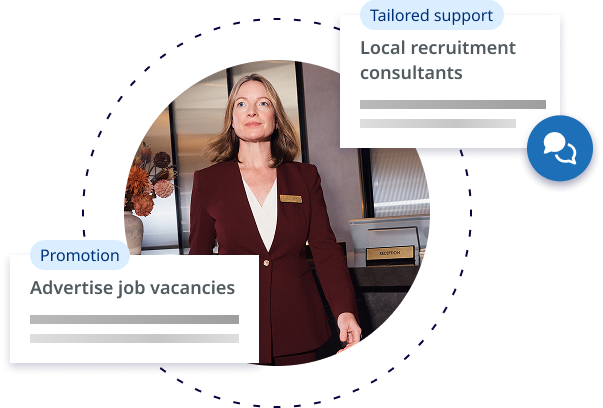
You can get end-to-end recruitment support from Jobcentre Plus, including tailored no-fee help from local recruitment consultants to:

  • write job descriptions
  • advertise vacancies
  • sift applications and shortlist quality candidates
  • interview candidates
  • arrange trial shifts or placements for jobseekers at no cost to you

Recruitment consultants at Jobcentre Plus use their local knowledge to help you find the right people for your business and can help you create an inclusive recruitment process.

The Ministry of Defence also provides a no-fee recruitment service for employers, matching job vacancies with people leaving the armed forces.

Businesses in Northern Ireland can use the Employer Services Branch for recruitment support from the government.

Decide how you want to recruit

Getting recruitment right and finding the right person for your business can take time.

Consider:

  • whether you already know people who might be a good fit for the role
  • whether to do the recruitment yourself or get help from a recruitment agency
  • how formal or informal the process should be
  • how quickly you need someone to start
  • whether you need someone with existing skills or someone who is motivated to learn

Taking your time to plan and structure your recruitment process will improve your chances of finding the right person.

Many businesses take on family members or young people as a first hire. Family members should be treated the same as any other employee and there are specific rules around employing young people and children.

Define the role and ideal candidate

Before you can write a job advert, you need to be clear about what you need and what ‘good’ looks like. Writing job descriptions and person specifications helps you define a clear shape for the role and assess applicants’ suitability.

Ask yourself:

  • if you want to employ someone on a temporary or permanent basis
  • how many hours a week you need them to work and what tasks they will be responsible for
  • what skills or experience you need the person to have
  • how much you will pay, how much leave you will offer and what other benefits you will provide

A person specification should only include criteria that are relevant to the job and should not use language that would discourage certain people from applying.

A good job advert should include:

  • the job title and a brief description of its main responsibilities
  • salary, weekly hours, working patterns, place of work and length of contract
  • required or preferred skills, qualifications or experience
  • the closing date for applications and information about the shortlisting and selection process

You can post the job advert on:

  • the government’s free Find a Job platform
  • general job platforms, such as Indeed, Reed or CV Library
  • LinkedIn – if connections share this it can get your ad in front of suitably qualified people
  • local message boards and community groups – this can often be the best choice if you need someone in the local area

Don’t forget that you can also advertise your job through your local Jobcentre Plus and may be able to access more help with recruitment.

Use a recruitment agency to find staff

Recruitment agencies charge businesses a fee for finding employees. They can be useful if:

  • you need to hire for very specialist roles
  • you lack the time or skills to run a recruitment process yourself

Manage applications and interview candidates

Decide how you will shortlist and score candidates. You must also decide how you will:

  • notify applicants who were unsuccessful
  • provide feedback to any applicants who ask for it

Keep records of scores, discussion and decisions. Applicants have a right to request their application information, including interview notes, and data protection laws apply to the personal information you hold on each applicant.

Interviewing candidates

If your job advert had essential and desirable criteria, use these to decide who to interview.

Your interview process could be:

  • an informal meeting where you can review experience and fit
  • a formal interview process
  • asking candidates to complete a trial shift – although you must normally pay them for this

The most suitable method may depend on how many applicants you get, the type of role you are recruiting for and on how much time you can give to the recruitment process.

Make an offer

Once you’ve chosen your preferred candidate, you need to offer them the role. At this stage, the successful candidate may want to negotiate some of their terms of employment. They can do this, but you do not have to agree to their requests.

At this stage, you will need to:

  • make a formal offer to the candidate and explain how they should accept this
  • agree when the person will start, their job title, salary and hours
  • confirm that the person has a right to work in the UK
  • ask for any other paperwork you need, such as references and qualifications
  • let unsuccessful applicants know the outcome of the process
  • file any paperwork in line with data protection requirements

If this is your first hire, there are legal steps you must take before the person starts working for you.

Backing you with recruitment support

Whether you have 1 vacancy or 100, our expert recruitment consultants are here to help you:

  • advertise your vacancies
  • sift applications and set up interviews
  • find the right people for your business
  • build your business's future workforce

Something went wrong. Please try again.

Was this page useful?

Thanks for letting us know

Can you tell us why this page was useful?

Do not share any personal or commercially sensitive information.

Cancel feedback form and refresh page

Thanks for letting us know

Can you tell us more about your feedback?

Do not share any personal or commercially sensitive information.

Cancel feedback form and refresh page

Thanks for your feedback