UK nations and regions
West Midlands
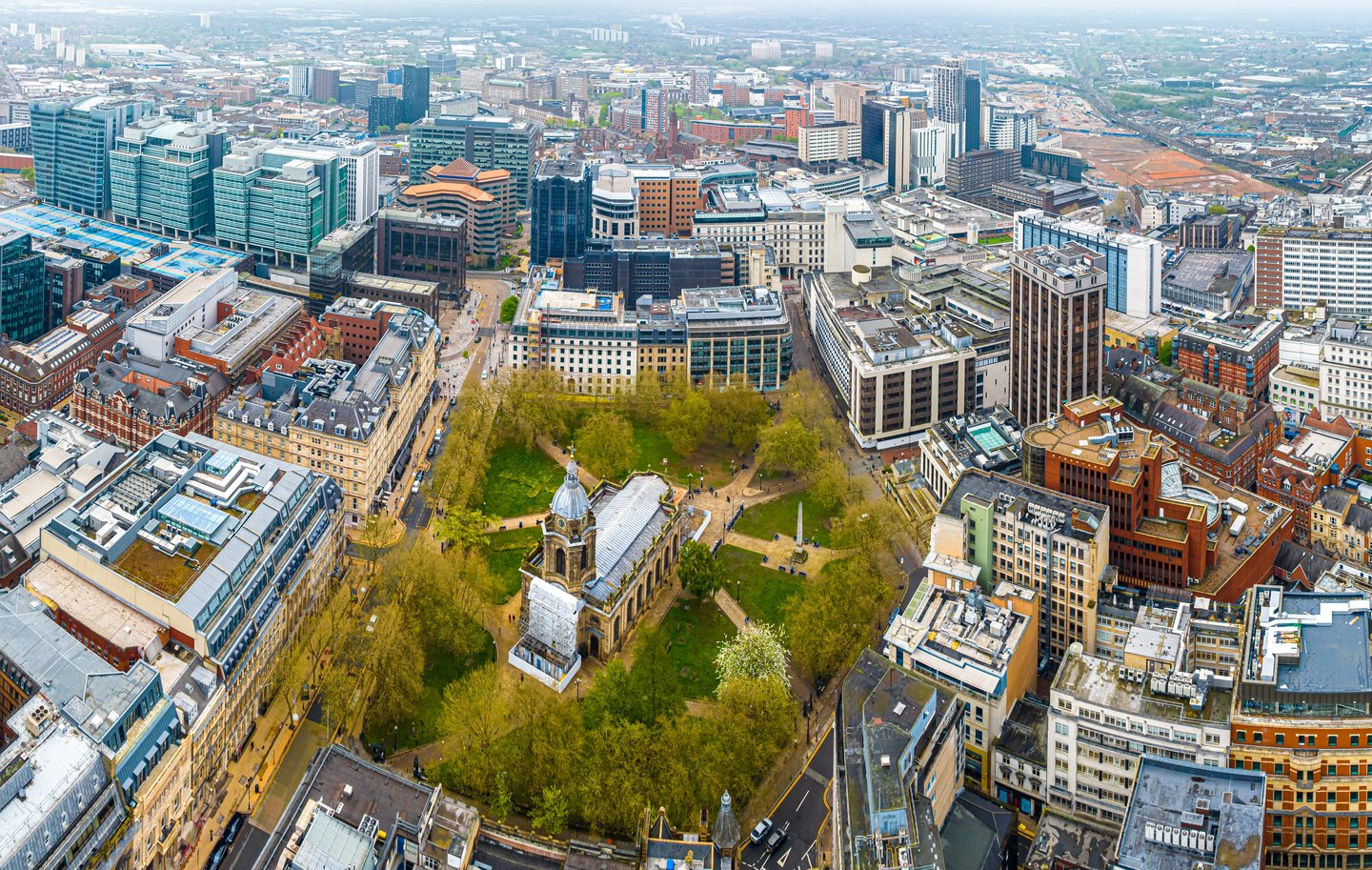
At the forefront of technologies such as industrial digitisation, life sciences and alternative fuels, the West Midlands is home to world-class assets and centres of innovative excellence. Due to its central location and strong transport infrastructure, the region is a key national logistics hub.
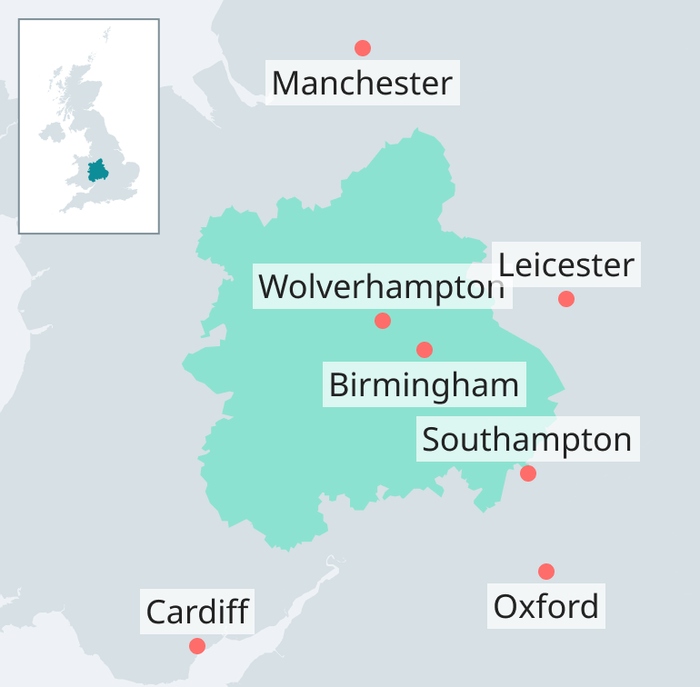
Known for its thriving business eco-system and underpinned by the UK’s youngest and most diverse population, the West Midlands has been named as one of the top 3 most innovative places in Europe for technology. Fed by 9 world-class institutions producing over 45,000 graduates each year, with a high graduate retention in the region, it offers a rich talent pool to help grow your business. The city of Birmingham boasts impressive business credentials, with the most significant number of businesses of any regional city (44,535 in 2024) and the largest number of start-ups after London (21,560 in 2024).
Key facts for the West Midlands
UK’s top region for foreign direct investment (FDI) outside London in 2024 to 2025
Highest GVA growth rate of any UK Region outside London over the last 10 years (2010 to 2020)
£25.5 billion goods exported from the region in 2021
£12 billion contributed to the national economy from the low carbon sector
Tech Fastest-growing tech economy in the UK
£117 billion economy
An industrial strategy for the whole of the UK
The modern Industrial Strategy is a new economic approach – a whole-of-government effort to back the UK’s strengths, with ambitious plans for 8 high-growth sectors (‘IS-8’) and the frontier industries at their leading edge, from quantum to pharmaceuticals. It is a 10-year plan, built on stability and openness, to make the UK the best country to invest in.
Building on the West Midland's strengths
The West Midlands already has a huge amount to celebrate and the Industrial Strategy’s Sector Plans promote its wide-ranging strengths to investors.
Advanced manufacturing
West Midlands hosts key manufacturing companies including Jaguar Land Rover, Collins Aerospace with Aston Martin and JCB in the wider region, alongside leading research institutions including Horiba Mira, MTC, Warwick Manufacturing Group, UK BIC and Harper Adams. Overall, a third of all British-made cars roll off West Midlands' production lines with growing electric vehicle and battery capabilities.

Clean energy industries
The West Midlands is a Smart Energy Systems cluster, with innovation assets such as Energy Systems Catapult, Tyseeley Energy Park, tech scale-ups and major players including Octopus, Cadent, National Grid, AEON and Hitachi. The GE Verona Stafford expansion is projected to deliver 600 jobs, providing facilities for production of critical components including HVDC transformers.

Creative industries
The West Midlands has 15,130 creative enterprises generating nearly £4 billion in Gross Value Added (GVA) in 2022. With an innovation focus on Createch, the region offers significant R&D opportunities to maximise converging technological expertise. On the HS2 line, Digbeth hosts Digbeth Loc Studios and the BBC, supporting a growing creator economy and diverse cultural ecology.

Defence
The West Midlands' defence strengths including combat air, next-generation land capabilities, cyber and AI. Key defence manufacturing sites, such as Hadley Castle Works Factory in Telford, are enabled by world-class innovation assets including MIRA Technology Park and MTC Coventry. Cyber Valley, spanning Herefordshire, Worcestershire, and Malvern, hosts the UK's largest concentration of cyber businesses outside London.

Digital and technologies
The West Midlands is one of the fastest-growing tech hubs in the UK, with supply side strengths in AI, Quantum, Cyber, Robotics and ACT hosting the UK Telecoms Lab, Wolverhampton Cyber Research Institute, Birmingham Institute for Quantum Technologies and the Sir Peter Rigby Digital Futures Institute. The region produces 66,000 tech graduates each year and is home to the country's first multi-city 5G testbed and the Diatomic Digital Twin.

Life sciences
The West Midlands has a £5 billion biopharma and £2 billion MedTech turnover. It's home to over 500 MedTech sites, the third highest number in the UK, 9 universities and 4 medical schools producing 11,000 medical science graduates a year and the largest UK trial environment. Key hubs include Birmingham Health Innovation Campus, Birmingham Knowledge Quarter, Arden Cross and West Midlands Health-Tech Accelerator.

Financial services
Birmingham is a large and historic financial services hub, with HSBC, Lloyds Banking Group and Deutsche Bank operating in the city. It has a large fintech sub-sector that employs thousands in the region, and Goldman Sachs opened a new technology office in Birmingham in 2021. The West Midlands benefits from good domestic and international transport links, a deep and diverse talent pool, and broader professional services ecosystem with firms such as PwC, EY Deloitte and KMPG operating there.

Professional and business services
Home to SuperTech, the UK’s only supercluster focused on 'next generation' professional services and related technology. It has access to vital client and talent pools through excellent connectivity to London, the rest of the UK and international destinations. It has a strong higher education base for talent and skills and R&D expertise, with 9 universities, 3 globally ranked business schools with 'triple-crown' MBA accreditation, and the unique Greater Birmingham Professional Services Academy.

Foundational industries relevant to IS-8 supply chains
Stoke-on-Trent has been the heart of the ceramics industry for centuries and there are critical minerals clusters in Birmingham. There are electricity networks in Stoke-on-Trent and a construction sector across the region.

Driving regional growth in the West Midlands
The Industrial Strategy introduces ambitious policies to drive growth and investment across every nation and region of the UK. This is a 10-year strategy which will be a living document. We want to continue to work with local government, Mayoral Strategic Authorities and devolved governments to ensure they can drive growth across the UK.
More policies will be delivered over time, but below are some of the specific interventions in the West Midlands that form part of our strategy.
Locally targeted investments in the IS-8 growth driving sectors
- New Professional and Business Services Hub in the West Midlands Combined Authority (CA) to support local PBS businesses, connect local investment projects with potential investors, and support the adoption of AI
- West Midlands CA will receive devolved funding from the £150 million Creative Places Growth Fund to support creative businesses and freelancers in their region
- Government is exploring the opportunity for a pilot initiative in partnership with the West Midlands CA to drive development of a strong and resilient electric vehicle supply chain in the UK
Devolved funding for the local leaders who know their places best to help deliver their Local Growth Plans
- At least £30 million earmarked for the West Midlands CA through the Local Innovation Partnerships Fund. This will empower local leaders to decide how to target research investment in the region and unleash its full innovation potential
- Recommitting £160 million investment to support tax relief and bolster Investment Zones for Advanced Manufacturing in West Midlands CA
Tools to help city regions and clusters attract private investment
- £100 million expansion of the British Business Bank's Nations and Regions Investment Funds. A new Cluster Champion in the West Midlands CA will support this by strengthening local financial networks and helping to connect firms with investors
- A strategic partnership between the West Midlands CA and the National Wealth Fund, providing enhanced, hands-on support to help develop and secure long-term investment opportunities
Connecting city regions and clusters
- £2,398 million Transport for City Regions funding for the West Midlands CA, allowing mayors to improve public transport connectivity. In the West Midlands, this will support the Metro extension connecting Birmingham City Centre to new sports quarter, unlocking £3 billion investment from private investors
- Providing faster, more frequent, and more reliable rail services between London and Birmingham by delivering HS2, and unlocking large-scale commercial sites along the route, including the transformational regeneration at Birmingham Curzon Street